

Aadi Ajmire, Jonny Dippery
•
January 19, 2026
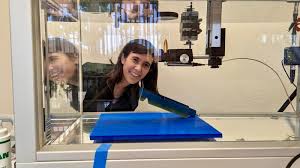
Guest Introduction: Dr. Sharena Rice
Dr. Sharena Rice is a visionary neuroscientist, neurotechnologist, and innovator. She has a career that brings together academic inquiry and technological innovation. With a PhD in Neuroscience from the University of Michigan, Dr. Rice is dedicated to explore not just how the brain works, but how we can build technologies that work with the brain. She currently serves as a research scientist and first employee at Sanmai Technologies, where she is working on a neuromodulation medical device. She writes for corporate audiences with Neurotech Reports. Overall, Dr. Rice is pushing boundaries in the pursuit of a future where neurotech enhances the ability for us to live our lives.
Question 1. You studied biochemistry, philosophy, and psychology, then transitioned into neuroscience. How did those experiences shape your work in neurotech?
Dr. Rice explains that her interests looked scattered on the surface, but they were always orbiting the same center. Biochemistry, philosophy, and psychology all pulled her toward the mind, toward thinking, and toward questions about human behavior and human nature that had fascinated her since middle school. She describes having a moment of honesty with herself where she realized she could not keep being pulled in three directions without choosing a deeper through line. Neuroscience became the place where she could bring those threads together.
She also shares a very practical detail that shaped her path. Her undergraduate university did not offer neuroscience as a full program, and the one course available was rarely offered and did not fit her degree requirements. So she decided to make neuroscience real anyway by doing research. She approached a professor, Dr. Kenneth Long, brought a research idea, turned it into a grant proposal, and started working in a lab. What surprised her was how different research felt compared to lab classes. She had felt chaotic and overwhelmed in traditional course labs, where everything felt like a race for equipment and reagents. Research felt calmer, more ordered, and more meaningful because it was about answering questions nobody had fully solved yet. That shift helped her realize she belonged in discovery work, and it nudged her toward the longer path through Michigan.
Question 2. How did you transition from wet lab neuroscience into neurotech and technology?
Dr. Rice describes the transition as something that emerged naturally once she started looking at what would be both enjoyable and employable. She points to graduate school lab rotations as a key moment. She intentionally looked for environments where she could learn cutting edge, transferable skills, including computational work, robotics, and techniques like optogenetics and two photon microscopy. As she rotated through labs, she noticed that very different scientific questions still converged on the same core reality, modern neuroscience increasingly depends on tools, devices, and engineered systems.
She shares a concrete example from early work, building and fixing devices used to measure rodent behavior. That daily experience of building, troubleshooting, and improving hardware felt different from pure discovery. It gave her a sense of progress that stacked day by day. The bridge to tech became even more real when she co-founded her first company during graduate school, focused on automotive technology using computer vision to classify pedestrian behavior and predict risk. What clicked for her was the parallel between predicting human movement and predicting rodent behavior. Different context, similar underlying problem. Over time, she began to see the convergence clearly. There was neuro, there was tech, and the combination became neurotech.
Question 3. Were there formative mentorship or research experiences at Michigan that changed how you work today in neuroscience and neurotech?
Dr. Rice answers this in a way that surprises the listener at first. She says one of the most important skills she gained was learning how to write well. Not just writing papers, but writing about science clearly, explaining why an idea matters, and creating figures that communicate complex concepts in a way other scientists and even non-scientists can understand. She emphasizes that the ability to translate scientific work into crisp communication is not a side skill. It becomes central in startups and in applied science because you constantly have to persuade others that an idea is worth investing in, funding, and building.
Her point is that graduate training does not only teach you experiments. It teaches you how to argue for a project, how to frame evidence, and how to make technical work legible. She suggests that writing is a skill worth doubling down on if you are in that environment because it multiplies your impact in both research and industry.
Question 4. What do you write and review at Sanmai, and what makes the company’s approach stand out?
Dr. Rice explains that in medical devices, writing is not optional, it is part of the machinery of making something real. She describes how a large amount of work involves documentation, which supports quality management, FDA submissions, and alignment with external collaborators. Without clear documentation, teams cannot move together, and partners cannot trust what is being built.
She also highlights something deeper, the mindset behind the writing. She says being a scientist is about attention to detail, and learning which details matter is a major difference between a novice and an expert. That attention shows up everywhere, in internal review board documents, in what you communicate to research participants, and even in intellectual property writing that must stand up to scrutiny from the US Patent and Trademark Office. She frames documentation and idea logging as part of how ideas become real, and how real ideas can continue evolving.
Question 5. What advice would you give undergrads interested in neurotech who feel overwhelmed by all the paths and skills?
Dr. Rice starts by gently challenging the idea that neurotech is entirely new. She points out that neurotechnology includes long standing medical tools like cochlear implants and deep brain stimulation, which have helped many people for decades. From there, her advice becomes practical and reassuring. She encourages undergrads to explore and to accept that almost nobody is good at everything at the beginning. The goal is to try enough things to learn what you are surprisingly good at, especially the skills other people find tedious.
She shares her own example. She realized she liked working with her hands and also liked working with words. That combination became powerful because it let her contribute in multiple ways, from building mouse implants to producing clear communication. She adds a more personal perspective, that life paths often make sense in reverse. Sometimes an obsession from childhood shows up later in a new form, and it ends up connecting to neurotech in ways you could not predict. She encourages students to look for problems that genuinely resonate, and to approach the field with sincerity and dedication.
She also gives advice that moves beyond campus. She recommends connecting with people working in the field outside the university and not relying only on media narratives. She suggests following the builders, the people actually running companies and shipping products, because their perspective is different from someone commenting from the outside.
Question 6. Would you give different advice to high school students interested in neurotech or research?
Dr. Rice widens the conversation to include pathways that are often ignored. She points out that medical trades can be an incredible route for students who want a stable, meaningful career and a direct connection to healthcare and research. She gives the example of MRI technologists or MRI technicians, noting that with a two year community college degree and certification, it can be possible to earn a strong salary while doing work that supports the healthcare system. She also notes that these skills can translate into research settings, especially in MRI related work.
Her tone suggests she wishes she had been exposed to these options earlier. The broader message is that there are many legitimate ways into neurotech and neuroscience, and not all of them require the same academic staircase.
Question 7. You work on focused ultrasound and also write about the broader neurotech space. What have you learned through doing both?
Dr. Rice first slows down to define the acronym for listeners. She explains that focused ultrasound, or FUS, uses ultrasound beams, a technology with a long history in safe clinical use such as OB GYN and diagnostics, but concentrates that energy to a small point to influence brain activity. What stands out to her is that it can do this without surgery, which immediately makes it compelling as a potential therapy.
She connects the promise of FUS to real clinical needs. Many drug treatments have side effects. Many surgical options are not accessible to everyone, either because not all patients are good candidates or because surgery can be disruptive to family life. She frames focused ultrasound as part of a push toward less invasive, more usable therapies.
From her writing work, she says she has gained a panoramic view of the field. She describes how neurotech progress is bottlenecked and unlocked by advances in material science, biocompatibility, and artificial intelligence for data processing. She mentions emerging areas like optogenetics and bio hybrid arrays, and she notes that some of these are still far from human use because of long regulatory paths. Writing helps her track what is coming next, not just what is already mainstream.
She also draws a contrast between medical neurotech and consumer neurotech. She expresses admiration for medical neurotech because of its rigor and the long, careful path of risk assessment and testing. She pushes back against the idea that serious neurotech is built casually, emphasizing it is driven by high quality teams and long development cycles. For consumer neurotech, she describes an open question about whether there is a real market and how useful these devices can become. She highlights material science as underrated, because devices that are uncomfortable or artifact prone will end up unused, no matter how exciting the concept is.
Question 8. Do you think we will ever have full control of the mind using technology?
Dr. Rice responds by questioning what we mean by mind in the first place. She gives a relatable example, how sometimes we say something brilliant in casual conversation that we never would have produced alone in a journal or in a high pressure academic setting. For her, this points to a mind that is deeply shaped by context. We are different people at a party than in an exam, different in the morning than at night. Because of that, she suggests that treating the mind as only the brain is too narrow. The mind also lives in relationship with the world.
From that framing, she argues that full mind control is not realistic, because controlling the mind would require controlling the world that the mind is interacting with. But she does see room for neurotech to support autonomy. She uses anxiety as an example. If technology could reduce an overactive fight or flight response, it might help a person discover a calmer way of interacting with the world, and then learn to return to that state through memory and practice. She describes this as a kind of gift, not a replacement for personhood.
She also emphasizes the precision problem. Even if we could influence brain states, it is incredibly difficult to specify something as exact as making someone think of one very specific gray cat rather than a slightly different gray cat. Her answer is not fear based, but grounded in what it means to work with complex systems.
Question 9. Follow up. If we could control emotions, would that make us less human?
Dr. Rice’s answer centers on agency and reflection. She suggests that for many people, relief from depression or other debilitating states is not about becoming less human, but about becoming unstuck. When someone can move again, it can restore hope and give them a chance to take charge of their life.
She argues that the outcome depends on how thoughtfully a person integrates the change. If someone uses a tool reflectively, with an understanding of what they are doing and with support from their environment, it can help them build a constructive arc rather than passively being transported into a new state. She suggests that reflective integration may even make treatments more effective and more meaningful, because the person is participating in their own change.
Question 10. How do you see neurotech shifting our understanding of mental health?
Dr. Rice brings the conversation to a surprising place. She says that even without technology, people can make small choices that change their day and their mental state. She shares a personal example about getting very little sleep but deciding to make the day amazing anyway, and how that decision changed the lived outcome. She describes small acts, choosing to show up with energy, choosing kindness, holding a door for someone, as examples of agency that improve life without a device.
She does mention artificial intelligence as having major potential, and she recalls advice from a professor who suggested learning statistics from psychology because psychologists are constantly trying to separate signal from noise in complex human data. Her broader message is that mental health is shaped by subtle effects and inner states, not only by external interventions. Neurotech and neuromodulation may sometimes give people permission to change, but the foundation of agency still matters. The technology, in her framing, can support a person, but it does not replace the person.
Question 11. How do you think about ethical responsibility when building tools that interact with the brain?
Dr. Rice describes the work as an honor and a privilege, and she emphasizes that ethical responsibility is built into the process, not just a philosophical afterthought. She notes that there are extensive compliance requirements for working with human research participants, and she stresses access as a central ethical issue. She says universities rarely teach how medical reimbursement works, yet insurance reimbursement often determines who can actually receive a treatment.
She points to the fact that medical neurotech is highly regulated, involving FDA approvals in the US and CE marking in Europe. She emphasizes that no one person is operating in a vacuum, and that many layers of permission and oversight shape the path of a device. She also argues that we should aim for treatments that are less invasive and better integrated into daily life. She suggests AI could play a role in evaluating whether a treatment is working for a particular person and whether they should switch approaches, which could improve outcomes and reduce harm. Her overall stance is that the responsibility is real, heavy, and taken seriously.
Conclusion
Dr. Rice urges people to keep the applied world on their radar, the world outside grades, papers, and awards. She frames the applied world as the space where the real measure becomes how many people you can help and how effectively you can help them. She encourages learning topics that are rarely taught in school but matter deeply in medical innovation, including intellectual property, health economics, insurance reimbursement, and standards. She mentions that organizations like IEEE and international standards bodies shape details as specific as labeling requirements, and those details can determine whether a device can actually be sold and used.
She also emphasizes relationship building and situational awareness. She encourages students to look beyond their lab bubble and understand what companies exist, what problems they are solving, and which problems genuinely resonate with them. She hints at a deeper strategic lesson, sometimes the reason progress stalls is that everyone is pushing in one direction when the solution is in another. She closes with optimism, saying she is looking forward to the next generation of innovators and excited to see what they build as she continues working in the space as both a scientist and a writer.