

•
July 27, 2025
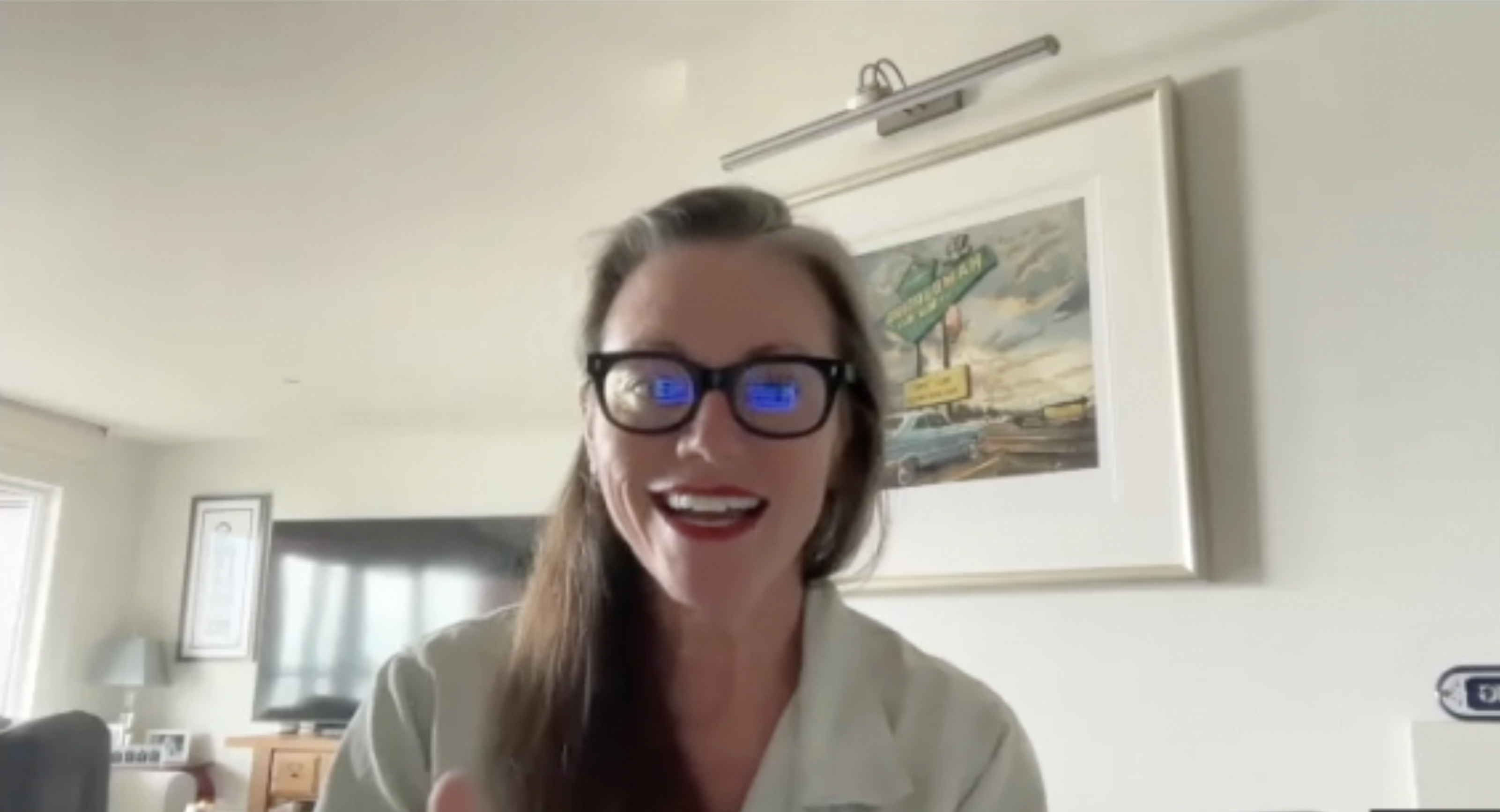
JoJo Platt is a prominent leader in neurotechnology, recognized for her dynamic roles spanning strategy, business development, and ecosystem building. She is the founder of Platt and Associates, a consultancy focused on advancing neurotech innovation, and serves as General Manager for a stealth neurotechnology startup. JoJo also leads business development at Neo-Bionica and heads partnerships at Corundum Neuroscience, driving collaboration across startups, research, and investment. Her expertise bridges science, entrepreneurship, and policy, with a reputation for connecting visionaries and catalyzing growth in brain-computer interfaces and neuroprosthetics. JoJo is a contributing editor at Neurotech Reports, a frequent speaker at international conferences, and co-chair of influential BCI workshops. Her career reflects a commitment to shaping the future of neurotechnology through strategic leadership and community engagement.
A Shift from Spreadsheets to Synapses
JoJo’s early career in accounting and tech taught her how infrastructure, digital or biological, drives transformation. The same curiosity that once fueled her work in internet connectivity now anchors her passion for neural connectivity and communication between biological systems.
“I started out in accounting,” she laughs, “and then ended up working at an internet backbone company right before the dot-com bubble. We were literally laying the infrastructure for video on the internet while everyone was still on dial-up.”
That early exposure to a world being redefined by connectivity planted the seeds for what would later become her fascination with neural connectivity, the biological version of a global network.
But first, she had to survive.
“As a single mom, I was working full time, taking night classes, and going through an IPO. When it was over, I looked at the marketing team’s expense reports and thought: I’m on the wrong side of the table. So I changed majors and started studying communications.”
That pivot, she says, opened the door to everything that followed.
The Nonprofit Crisis That Led to a Scientific Calling
Years later, JoJo found herself running a nonprofit that had gone completely off the rails. “It was an IRS disaster, people went to jail. I was brought in as the court-appointed trustee to fix it and shut it down.”
In managing roughly $47 million in charitable funds, she encountered a grieving board member who wanted to fund sepsis research. That connection led her to the Feinstein Institute, and eventually to Dr. Kevin Tracey, whose pioneering work on the cholinergic anti-inflammatory pathway redefined the relationship between the nervous and immune systems.
“That was the spark,” she recalls. “Suddenly I was immersed in this world where electrical signals could regulate inflammation. I wasn’t just reading about neurotech, I was helping connect the people building it.”
Her role quickly evolved into a kind of strategic nexus: identifying research nodes, connecting innovators, and translating between disciplines. “That’s really what I do best, bridge the scientific, the operational, and the human.”
Building the Modern Neurotech Network
Today, through Platt & Associates, she works at the intersection of neuroscience, venture strategy, and innovation ecosystems. Her day-to-day spans early-stage venture advising, biodesign mentorship, and global partnerships between research institutions, accelerators, and funds.
“I’m part of a lot of teams,” she says. “If it’s not accounting, HR, or housekeeping, I’m your girl.” Her value, she explains, comes from knowing how to diagnose what’s needed, prioritize it, and either execute or bring in the right expert to move things forward.
JoJo also organizes a program called the Cleveland NeuroDesign Entrepreneurs Workshop, which is a hands-on program where engineers, neuroscientists, and clinicians use the Biodesign process to develop neurotechnology solutions.
The Case for Implants and the Promise of Going Skin-Deep
For JoJo, neurotechnology represents precision and personalization. She believes implantable devices are key to treating neurological disorders at the circuit level, though her current work explores how far non-invasive systems can go.
Asked why she still gravitates toward implantables in an increasingly non-invasive landscape, her answer is both technical and personal.
“I had a close family member go through Alzheimer’s,” she explains. “That experience made me question the systemic approach to CNS disorders. We flood the whole body with drugs to reach something that’s purely local. Neurotechnology, especially implantables, offers precise, circuit-level control instead of chemical chaos.”
“At Corundum Neuroscience, where I’m involved on the investment side, we only support technologies that don’t even break the skin. It’s a deliberate constraint that forces creativity. How can you read or modulate neural signals through the skull or the skin with fidelity comparable to invasive systems? That’s the frontier right now.”
She cites Magnus Medical’s transcranial system for treatment-resistant depression as a benchmark. “Their FDA pivotal trial was stopped early, not for safety, but because the sham group was doing so poorly compared to the active treatment that it was considered unethical to continue. That’s unheard of in psychiatric trials.”
Neuropsychiatry: The Next Frontier
JoJo sees neuropsychiatry as the field’s most promising growth area, combining neuroscience, data, and device-based therapies to reimagine mental health treatment.
If there’s one area she’s most excited about today, it’s neuropsychiatric disorders, a domain she once avoided.
“Years ago, if someone said, ‘We’re developing for depression or schizophrenia,’ I’d politely decline. The failure rates were terrifying.” These populations are complex, comorbid, and under-characterized. Diagnoses are rarely singular, it’s almost never just depression or just schizophrenia.
That mindset shifted after she witnessed the successes of Motif Neurotech and Magnus Medical, both showing that targeted, circuit-based interventions could meaningfully improve psychiatric outcomes. “Their progress made me realize that neuropsychiatric disorders might actually be the best entry point for wide adoption of neurotechnology,” she says. “The need is massive, the biology is increasingly understood, and device-based solutions can scale in ways that drugs can’t.”
She’s equally inspired by investors driving this shift. “Amy Kruse at Satori Neuro has built a fund that lives and breathes neuropsychiatric innovation, not exclusively neurotech, but with deep neural roots. Her work, along with the One Mind Accelerator, is rewriting how we fund and evaluate mental health innovation.”
The One Mind Accelerator, where she occasionally collaborates, is especially meaningful to her. “They’re platform-agnostic, psychedelics, digital health, neurotech, it doesn’t matter. What matters is the impact on mental health. That inclusive model has completely changed how I view neuropsychiatry.”
On Leadership, Mentorship, and Gut Instincts
For JoJo, leadership in neurotech is about balancing precision and intuition. Her mentorship philosophy mirrors the field itself: evidence-driven but deeply human.
Despite her influence, she admits to feeling imposter syndrome at times. “It’s really just fear in disguise, fear of trying something new. You beat it by doing it once.”
Her advice to young neurotech professionals is systematic curiosity:
“Make three lists: companies you admire, job titles you find intriguing, and skills you love or hate. Over time, patterns emerge. That’s your compass.”
And never underestimate intuition. “Every time my brain overrules my gut, I regret it,” she says. “Your gut sees the red flags your brain rationalizes away.”
Hearing her say that reminded me how central decision-making is in any career.
Through her experiences across neurotech, JoJo offered something more lasting than technical advice: the reminder that trusting yourself is often the most important decision you make, especially when the path isn’t fully clear.